
Transformation
Transformation is not a sudden change. It is what happens when small steps gather enough weight to become a new normal.

When you move through awareness, discovery, acceptance, and progress, the road often feels uneven. You test ideas. You try things. You pick something up, put it down, and reach for it again later. Some days you feel hopeful. Other days you wonder whether any of it is working.
Occasionally you look back at the past with fondness, forgetting how uncomfortable it was. The past can seem romantic until we remember they didn’t have hot showers or Starbucks.
That mixture of hope and nostalgia is part of the process.
Transformation happens quietly within that mixture.
Transformation rarely feels like a celebration of “I have arrived!” More often, it is something you suspect in passing. You open your project, and it feels easier than it used to. You realize you have stopped dreading a task that once felt impossible. You settle into a routine that no longer feels foreign. A new tool, once unfamiliar, now fits comfortably in your hand.
Transformation is the moment you recognize that the work you have been doing has taken root. What once felt awkward has become natural. What once required conscious effort now feels instinctive. You are no longer forcing yourself into the new pattern. You are simply moving within it.
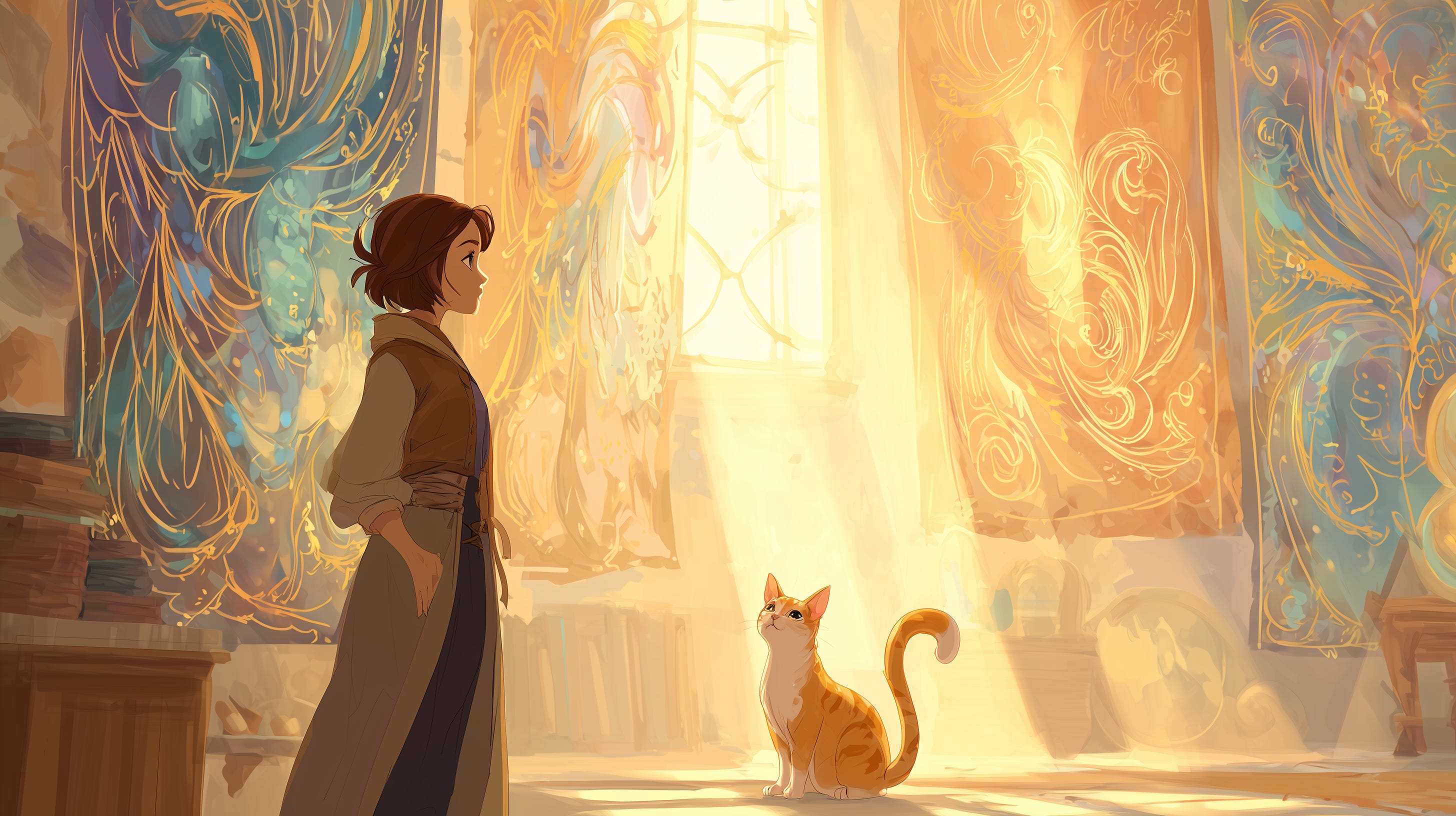
This is when the toddler runs across the room and catches the cat.
Growth often feels this way. It feels uncomfortable until it is not. You notice it when you realize you are no longer in the same place you were before. A creative habit begins to feel like home. There is a sense of internal alignment that did not exist at the beginning of this journey. The spark inside you feels warmer and more reliable.
Transformation does not erase the challenges that brought you here. Instead, it places you on steadier ground. You have learned something about yourself: that you can shift, soften, adjust, and still remain true to who you are as a creative person. That resilience becomes part of you.
You may even feel a new desire rising, something that wants more room. Transformation often awakens a kind of quiet confidence. You begin to say, “I can work with this. I can grow from here.” The sense of possibility that appeared back in discovery now feels stronger, empowered. It has form. It has weight. It has rhythm.
What you built through small steps becomes strong enough to hold you.
Transformation is not an ending. It is the beginning of a new stability. A new creative season. A renewed relationship with your spark. As you stand in this steadier place, you carry forward everything you learned along the way. And as you move into the next chapter of your creative life, you do so with a sense of trust that was not there before.
A growing flame that lights the path to hope and joy.
Reflection Prompts
What feels more natural now than it did when you began this process?
Where do you notice a sense of ease or steadiness returning?
What small change has quietly grown into something supportive?
How has your understanding of yourself as a creative person shifted through this cycle?
Write these answers to honor yourself for walking through each stage of ADAPTation with patience and care. Offer yourself gratitude for the steps, the pauses, the questions, and the courage that brought you to this new place of creative potential.
This is one of 5 posts covering the ADAPT method for creatives adapting to the changes in our modern world. These are all part of The Work of Joy, my current non-fiction project. You can preorder the full epub here.
If you want more like this, I’ve completely updated my most joyful class, It’s a Wonderful Writer’s Life. It’s a wonderful gift for yourself or for any writer who wants to shake off the drain of 2025 and step into 2026 refreshed.
This is beautifully grounded and honest, especially how it shows growth as something you notice quietly rather than announce.
When was the last time you realized a hard thing had suddenly started to feel natural?
Hi Deleyna. I starting to feel more ease that AI can assist me in progressing in my writing and learning. Recently it provide a list of improvements that can help me improve phrasing of the novel I’m writing. By that, I mean help “listening” to the sound of what I write. Thanks for the reminder to look at these small transformations!