

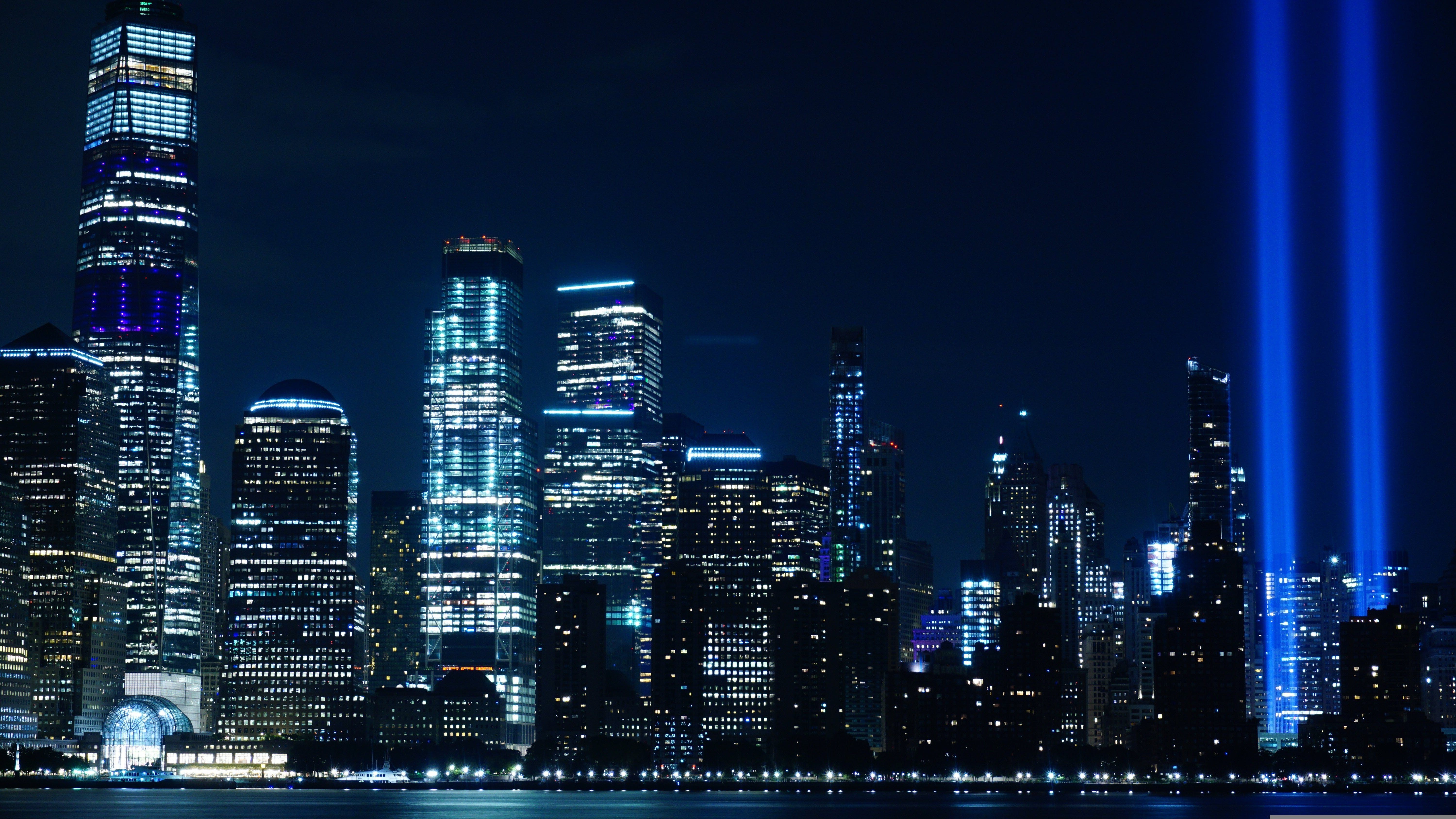
Twenty-five years.
Anyone who lived through 9/11 remembers where they were. I’ve written about where I was, and I’m not going to tell all of it again. The short version: a phone call with a rush from a commander who normally never rushed anybody, my husband’s voice at the shop already focused on task, and me asking “why” in what turned out to be my last moment of innocence.
What’s different this year is the math.
Twenty-five years is long enough that a lot of people reading this weren’t alive for it. For them it’s a date in a history class. Something that happened to their parents. And I catch myself wanting to grab them by the shoulders and say, no, you don’t understand, that was the day the world stopped turning.
Which is a song title, by the way.
But I want to tell you about a different day. Because 9/11 wasn’t the first “where were you” of my life, and what happened after an earlier one is the reason I’m able to write about hope when many see the world crumbling.
January 1986
I was in college when we lost the Space Shuttle Challenger.
You know the part everyone knows. There was a teacher on board, and because there was a teacher on board, the whole country’s schoolchildren were watching it live. In classrooms. On those wheeled televisions the AV kid brought down the hall.
An entire generation watched it happen in real time, sitting at their desks, while their teachers tried to figure out what to say.
I want you to think about that for a second, because we’ve gotten used to it and the loss was tragic. Not just loss of life, which was horrific enough. But loss of hope and confidence in a program many dreamed would unify humanity.
September 1988
Thirty-two months later, I was working as a secretary in the life sciences department at NASA, when Discovery flew.
We called it Return to Flight. That was the actual name for it.
I got to sit in a mock-up of the control center and watch. There was so much excitement in that room, and so much terror, both at once. We’d been told: this was it. Succeed or watch the program die. We were holding our breath. All of us. Nobody was pretending we weren’t.
And underneath the terror there was hope, because the shuttles were always about hope. That was the whole point of them.
(They’re all gone now, stored in museums. Don’t get me started.)
I was in my twenties, still learning how to live with an autoimmune disease that no one could make better. I didn’t know I was learning anything. But I was standing in a building full of people who had lost everything in front of the entire world, and had spent nearly three years finding out exactly what went wrong, and were now putting another group of brave human beings on top of a rocket.
What I built on it
I left NASA in 1989. Got married. Had children. Built a life knowing my illness could flare whenever it wanted. Lived through the flares.
My husband and I ran an aircraft maintenance shop. The days were full of children’s laughter and airplanes. I took the kids to Canada on a whim one weekend because it was a nice day and the aquarium is in Vancouver and you could just DO that.
I’ve called that time naive, in the things I’ve written since. It wasn’t naive, it was hopeful. I’d watched how professionals rebuilt hope up close, and I’d built my own life on the hope that the future was bright.
Then a Tuesday morning took the foundation out from under everything we’d built. A tragedy rocked our nation with ripples that spread around the world.
Our airport shut down. Planes sat on the ground for months while the government decided whether anything could fly that close to Seattle. I was at work in a silence that should never exist on an airport when the air started to vibrate, and we all walked out onto the ramp and looked up at a flight of military transports going over low and slow.
The shop didn’t survive. It took a few years to finish dying, the way things do when the damage is structural.
Then we lost the house, and a lot more.
Everything was gone except family.
The part nobody puts in these essays
I did not get up and decide to rebuild.
Those first couple of years after we lost the house were dark. Dark, dark, dark. I got dragged along by people who loved me, and I mean dragged, and they had to drag me for a long time. My body was there, but my heart was crushed.
If that’s where you are right now, being dragged counts. You’re still here. Just get through the days any way you can.
What eventually got me on my feet wasn’t optimism showing up again like a change in the weather. It was work, purpose, and the annoying fact that even in dark times, I’m still a writer. I became a publisher. I started honoring other people’s writing, and encouraging writers, and putting books into the world that wouldn’t have existed otherwise.
The hope came back while I was working. Not before.
I wrote a book about this and called it The Work of Joy, because that’s the part people skip. Joy is work. It’s a thing you do with your hands on the hardest days, and it doesn’t come easily after tragedy.
That’s my return to flight, my return to hope. One of many. I grew up in a generation that expected the bombs to fall at any moment, and somehow survived. I watched a shuttle come apart and then watched us return to flight. We lost the shop and the house and I found my way to put everything into my love of words.
So where does that leave me on this year’s apocalypse?
Because of course we have a new dire threat to humanity. Creatives that I know are frightened, and I don’t think they’re silly for it. They ask me why they should put energy into writing when the world is crumbling.
You’ve heard the quotes. Somebody smart says there’s a ten percent chance AI ends the human race. I notice a lot of folks ignoring the other side of that equation. That means there’s a ninety percent chance that AI finds a way to save the planet, because the human race was already doing a pretty good job of messing things up all on its own.
I’m not going to tell you it’s fine. I’m not blind to the harm these tools are already doing to real people and to the environment, and I’ve written about that too.
What I’ll tell you is that this is the second existential technology race I’ve lived inside, and I remember what the first one did to a kid. I spent my childhood waiting for the bombs to fall. They haven’t yet. That’s not a guarantee of anything. It’s just data I happen to have that a younger person doesn’t.
Do I think AI could make a better world? Yes. I want the utopian future. I want replicators and a green Earth that people protect because they love it, WITH the technology, not despite it. I want diversity and respect. I want a medical tricorder that can look at a person and say what’s actually wrong with them.
That last one isn’t a daydream for me. Because it turns out that my auto-immune disease is hereditary, and I’ve passed it on.
I would very much like a tricorder, please.
I’m not expecting that future. I’m working toward it. Those are different, and at twenty-five years out from that terrible morning when the world stopped turning, I’ve earned the opportunity to hope, to find joy.
Which brings me to why I make things
The world has felt like it’s coming apart for most of my adult life. Sometimes it actually was.
Every single time, the thing that got me through it was making something, or helping somebody else make something.
Not because art fixes anything. It doesn’t. Nobody ever rebuilt an airport with a novel.
But a person who is creating something has already decided there’s going to be a next week. That’s what the act means. You can’t write chapter two for a world you don’t think is coming. Every story you finish is a wish for the future, and the machinery of humanity runs on exactly that kind of small, stubborn, unreasonable hope.
So today I’m going to remember the firefighters, and the sound of those alarms, and the people who died just going about their lives.
And tomorrow I’ll go back to fighting for the joy I believe in.
Same as I said on this day sixteen years ago. I meant it then. I’ve got more evidence now.
Where were you? If you were there, I’d love to hear it. If you weren’t, go ask somebody who was, while we’re still around to tell you.
Then go create something.
It's so hard to be an empath on days like this. I've teared up like 17 different times. This essay from you was one of them. I feel so much closer to you now. I guess that's the point of this beautiful life, no? Hugs, my sweet friend. 💜💜💜
This is lovely! The idea of creation as a sign of hope rings true, and it's one of the best answers I've ever heard for the question, "Why do you write?" Thanks for the most memorable Sept. 11 tribute I've read in a long time. <3